Phonalyze: The Remote Voice Analysis Tool Built for Speech Pathologists
Telehealth has transformed clinical practice — but most voice analysis tools haven’t kept up. Phonalyze bridges that gap: a HIPAA-compliant, browser-based platform that lets speech pathologists and laryngologists deliver accurate, real-time acoustic assessments from anywhere.
The Growing Need for Remote Voice Assessment
The healthcare industry has undergone a rapid shift toward digital-first care. According to the Centers for Disease Control and Prevention (CDC), telehealth visits increased by 154% in early 2020 compared to the same period in 2019 — and utilization has remained elevated ever since.
Traditional in-person voice assessments — while clinically thorough — create real barriers. Patients with dysphonia, Parkinson’s disease, or post-surgical voice disorders often struggle with travel. Clinicians managing busy caseloads face scheduling bottlenecks. And rural communities frequently lack access to trained laryngologists altogether.
The American Speech-Language-Hearing Association (ASHA) recognizes acoustic analysis as a core component of comprehensive voice evaluation. The question is no longer whether remote voice assessment is viable — it’s which platform delivers clinical-grade accuracy in a telehealth-safe package.
What Is Phonalyze?
Phonalyze is a web-based voice analysis platform developed by Cognizn, a US-based healthcare software company. It allows clinicians to upload pre-recorded audio or capture voice samples directly in the browser, then instantly compute the acoustic parameters essential to clinical voice evaluation.
Unlike desktop tools such as Praat (University of Amsterdam), Phonalyze requires no software installation and is optimized for clinical workflows — including patient session management, secure SMS links, and integrated reporting.

Who Is Phonalyze For?
Key Voice Metrics Phonalyze Measures
Phonalyze measures the core acoustic parameters used in standardized clinical voice assessment. Each metric is computed in real time and displayed alongside interactive spectrograms.
| Metric | Clinical definition | Normal range | Clinical significance |
|---|---|---|---|
| Fundamental Frequency (F0) | Average rate of vocal fold vibration (Hz) | Male: 85–180 Hz Female: 165–255 Hz |
Indicates pitch; altered in dysphonia, Parkinson’s |
| Jitter | Cycle-to-cycle variation in pitch period (frequency perturbation) | < 1.04% | Elevated in vocal fold lesions, neurological disorders |
| Shimmer | Cycle-to-cycle variation in amplitude (loudness perturbation) | < 3.81% | Elevated in roughness, breathiness, vocal fold mass lesions |
| HNR (Harmonics-to-Noise Ratio) | Ratio of periodic to aperiodic signal energy (dB) | > 20 dB | Low HNR indicates breathiness or hoarseness |
| Voice Breaks | Sudden loss of periodic vocal fold vibration mid-utterance | 0 per sustained vowel | Associated with severe dysphonia, spasmodic dysphonia |
Phonalyze vs. Traditional Voice Analysis Methods
How does Phonalyze compare to conventional voice assessment approaches? The table below outlines key differences across clinical, technical, and logistical dimensions.
| Feature | Phonalyze | Praat (desktop) | In-clinic assessment |
|---|---|---|---|
| Remote / telehealth compatible | ✓ Yes | ✗ No | ✗ No |
| Software installation required | ✓ None | ✗ Required | ✗ Specialized hardware |
| HIPAA compliance | ✓ Built-in | ✗ Not certified | ✓ Via facility |
| Jitter & Shimmer analysis | ✓ Yes | ✓ Yes | Varies |
| Patient SMS workflow | ✓ Built-in | ✗ No | ✗ No |
| Session reporting | ✓ Automated | Manual | Manual |
| Mobile-first design | ✓ Yes | ✗ Desktop only | N/A |
| Starting cost | $39/month | Free | High (facility + staff) |
Core Features of Phonalyze
Real-time acoustic analysis
Results are generated instantly after recording or upload. Clinicians receive pitch tracking, intensity curves, jitter, shimmer, HNR, and voice break detection without waiting for processing queues. Interactive spectrograms allow visual inspection of vocal frequency patterns.
Mobile-first, browser-based access
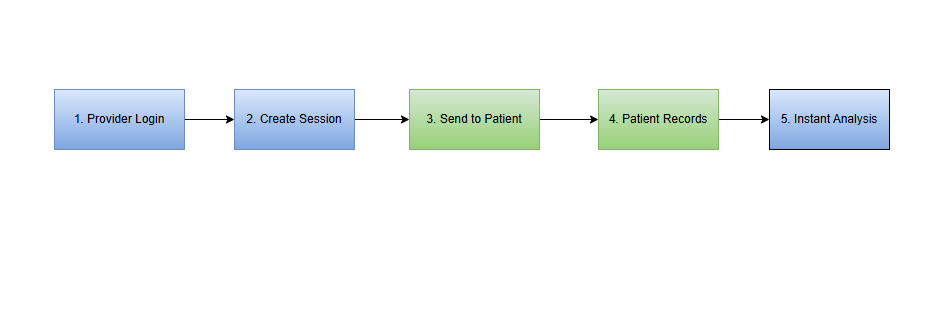
Phonalyze works on any modern browser — Chrome, Safari, Firefox, Edge — on desktop or mobile. Patients receive a secure URL via SMS and record directly from their phone. No app download is required for either the clinician or the patient.
Patient session management
Create patient sessions in seconds, select from a menu of standardized voice and perceptual tasks, customize assessments for individual needs, and track longitudinal progress through detailed session reports. Group practices benefit from shared patient population access and multi-therapist controls.
Secure SMS patient communication
Send patients a unique, secure recording URL via SMS directly from the platform. The clinician’s personal phone number is never exposed. Patients follow guided instructions to complete their recording — no technical knowledge required.
HIPAA Security & Data Privacy
In clinical settings, data security is a regulatory requirement, not a feature. Phonalyze is built on HIPAA-compliant infrastructure with the following protections:
For practices navigating telehealth compliance, the HHS HIPAA Telehealth guidance provides a useful reference alongside Phonalyze’s built-in compliance infrastructure.
Pricing Plans
Phonalyze offers flexible plans for individual practitioners and group practices, with no long-term commitment required.
- 1 clinician account
- Unlimited patient sessions
- All acoustic metrics
- SMS patient links
- Session reporting
- Multiple therapist accounts
- Shared patient population
- Multi-therapist access controls
- Collaborative assessment tools
- Priority support
- 1 clinician account
- Unlimited patient sessions
- All acoustic metrics
- SMS patient links
- Session reporting
- No credit card required
Frequently Asked Questions
Jitter is the cycle-to-cycle variation in the frequency (pitch period) of vocal fold vibration — also called frequency perturbation. It is expressed as a percentage; normal jitter is below 1.04% according to ASHA clinical norms.
Shimmer is the cycle-to-cycle variation in amplitude (loudness) of the voice signal — called amplitude perturbation. Normal shimmer is below 3.81%. Both metrics are elevated in patients with vocal fold lesions, neurological voice disorders, or functional dysphonia.
Yes. Phonalyze is built on HIPAA-compliant infrastructure with end-to-end encryption, secure anonymous URL generation, and protected patient data transmission. Patient voice recordings and session data are stored in compliance with HIPAA Technical Safeguards for electronic Protected Health Information (ePHI). For full compliance documentation, visit the Phonalyze HIPAA page.
Phonalyze is designed to complement in-person assessment, not fully replace laryngoscopy when visual examination of the vocal folds is clinically necessary. For acoustic analysis — jitter, shimmer, HNR, pitch, and voice break detection — Phonalyze delivers results equivalent to in-clinic tools. The Mayo Clinic notes that acoustic voice analysis and laryngoscopy serve complementary diagnostic roles in comprehensive voice evaluation.
No. Phonalyze is fully browser-based. It runs on Chrome, Safari, Firefox, and Edge on both desktop and mobile devices. Clinicians log in through any browser, and patients record via a secure URL sent by SMS — no app download is required for either party.
Phonalyze is clinically useful for assessing and monitoring a range of voice disorders including:
- Dysphonia (all types)
- Vocal fold nodules, polyps, and cysts
- Spasmodic dysphonia
- Parkinson’s disease-related voice changes
- Post-surgical voice rehabilitation
- Functional voice disorders
- Voice changes related to vocal overuse or misuse
See ASHA’s voice disorders resource for a comprehensive clinical overview.
Praat is the gold-standard free acoustic analysis tool widely used in research. Phonalyze is purpose-built for clinical practice and telehealth workflows. Key differences: Phonalyze requires no installation, is HIPAA-certified, includes patient session management and SMS communication, and generates automated reports. Praat is free but requires desktop installation, manual scripting, and has no patient management or security compliance layer. For clinical telehealth use, Phonalyze is the more practical choice.
Individual plans start at $39/month and group practice plans start at $120/month. A 30-day free trial is available with full feature access and no credit card required. There are no long-term commitments — plans are billed monthly and can be cancelled at any time. See full pricing details →
Yes. Phonalyze supports pediatric voice assessment. The platform allows clinicians to customize assessment tasks appropriate for children, and the browser-based recording workflow is simple enough for use at home with parental supervision. Note that pediatric acoustic norms differ from adult values — clinicians should apply age-appropriate reference ranges when interpreting results.
Clinical References & Sources
- Centers for Disease Control and Prevention. Trends in the use of telehealth during the emergence of the COVID-19 pandemic. MMWR, 2020.
- American Speech-Language-Hearing Association. Voice Disorders — Clinical Portal. ASHA, 2023.
- Mayo Clinic. Laryngoscopy — Purpose & Procedure. MayoClinic.org, 2021.
- Boersma, P. & Weenink, D. Praat: Doing phonetics by computer. University of Amsterdam.
- U.S. Department of Health & Human Services. HIPAA and Telehealth. HHS.gov.