AI-Powered Voice Disorder Diagnosis: How Phonalyze is Transforming Speech Pathology
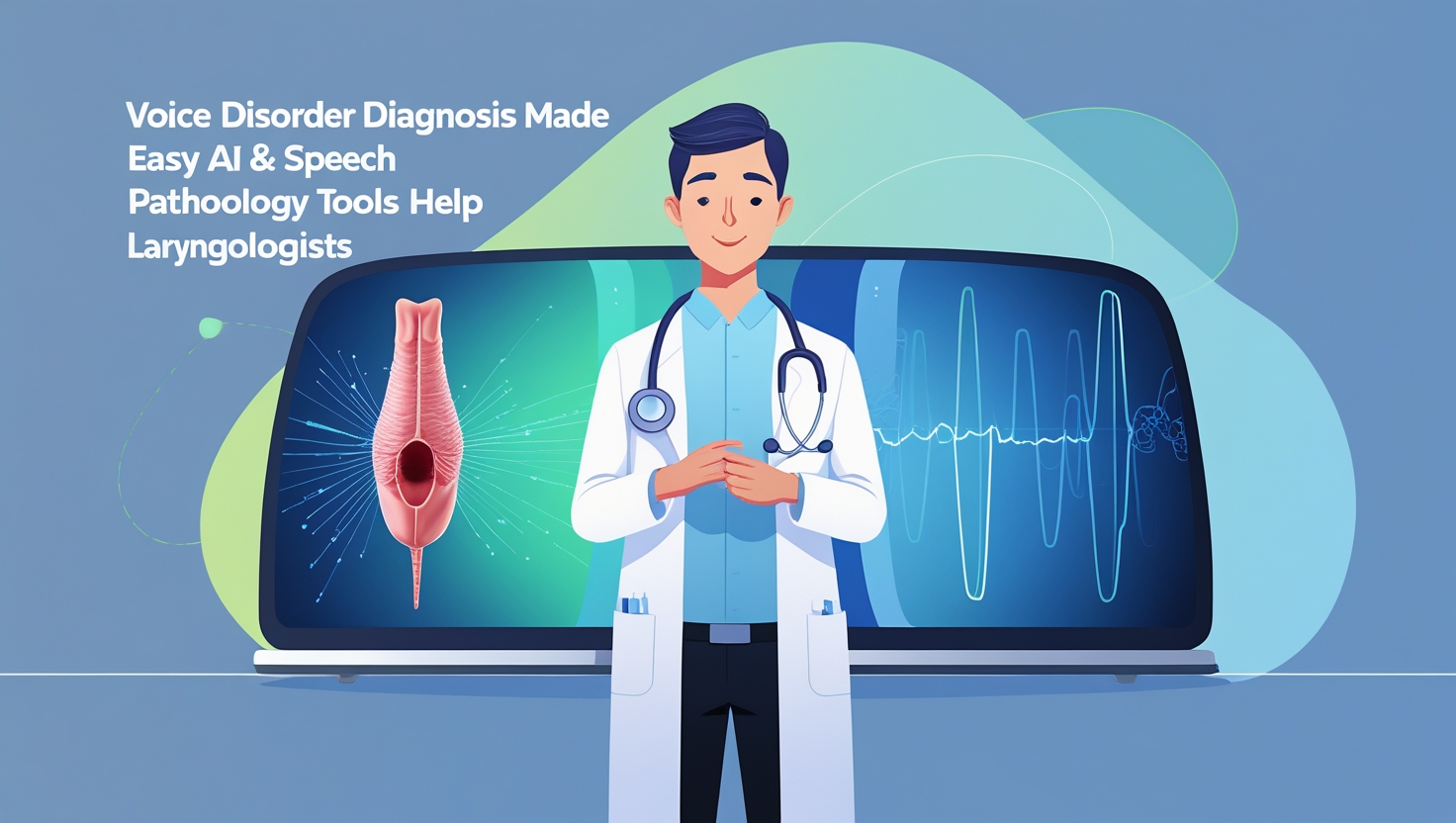
Voice disorders affect millions of people worldwide — yet traditional diagnosis has long required in-person visits to specialists who are often difficult to access. Artificial intelligence is changing that. AI-powered platforms like Phonalyze are making clinical-grade voice disorder detection faster, more accurate, and available to patients anywhere in the world.
Understanding Voice and Speech Disorders
A voice disorder occurs when the quality, pitch, or loudness of a person’s voice becomes abnormal — interfering with communication or causing distress. According to the American Speech-Language-Hearing Association (ASHA), voice disorders are among the most prevalent communication conditions, affecting professionals, children, and adults alike.
Common causes and types include:
For a deeper clinical guide to voice disorder types, causes, and treatment, see our comprehensive article: Voice Disorders: Types, Causes, Symptoms & Treatment.
Common Voice Disorder Symptoms
Recognizing the early signs of a voice disorder enables faster intervention and better outcomes. The National Institute on Deafness and Other Communication Disorders (NIDCD) reports that the most frequently experienced symptoms — and their clinical prevalence — include:
Source: National Institute on Deafness and Other Communication Disorders, 2024
Speech Pathologists vs. Laryngologists
Two types of specialists play key roles in voice disorder care — and understanding the difference helps patients find the right care faster:
The Role of AI in Modern Speech Pathology
Advancements in AI for acoustic speech analysis
Artificial intelligence has introduced a new era of precision in speech pathology. Deep learning models can now identify subtle acoustic deviations in voice recordings — perturbations in pitch, amplitude, and periodicity — that were previously detectable only by experienced clinicians with specialized equipment. These models are trained on large datasets of normal and disordered voice samples, enabling them to recognize patterns associated with specific voice pathologies.
A landmark 2023 study in the Journal of Voice found that AI models achieved over 90% accuracy in detecting vocal nodules from acoustic data alone — comparable to the diagnostic performance of experienced laryngologists.
AI-driven diagnostic workflow
Modern AI diagnostic tools process voice recordings through a multi-stage acoustic analysis pipeline. Here is how an AI-powered assessment works end to end:
-
1Voice sample captureThe patient records a standardized voice sample — typically a sustained vowel (/a/) and a connected speech task — via browser on any device. No specialized microphone is required.
-
2Acoustic feature extractionAI algorithms extract key acoustic parameters: fundamental frequency (F0), jitter, shimmer, harmonics-to-noise ratio (HNR), and voice break locations — the same metrics used in gold-standard clinical tools like PRAAT.
-
3Pattern recognition & classificationMachine learning models compare extracted features against normative databases and known disorder profiles, flagging deviations and generating probability scores for specific disorder categories.
-
4Clinician-ready report generationResults are presented as structured reports with visual spectrograms, metric summaries, and deviation highlights — ready for clinical interpretation by the speech-language pathologist or laryngologist.
-
5Progress tracking over timeSerial assessments enable objective longitudinal tracking — allowing clinicians to measure therapy effectiveness and adjust treatment plans based on real acoustic data, not just subjective impression.
AI impact on telehealth speech therapy
The combination of AI and telehealth has removed the two biggest barriers to voice disorder care: geography and cost. AI-powered platforms allow speech pathologists to deliver personalized therapy remotely — monitoring progress, adjusting exercises, and identifying regressions — without requiring the patient to travel to a clinic. This is especially transformative for rural populations, elderly patients, and individuals with mobility limitations.
Transforming Laryngology with AI Technologies
Early detection and faster diagnosis
Traditional laryngology relies heavily on visual examination via laryngoscopy — a procedure that requires clinic attendance and specialist availability. AI-powered acoustic analysis provides a complementary screening layer: patients can submit voice recordings remotely, and AI can flag potential issues for prioritized specialist review. This triaging capability reduces wait times and ensures that patients with more serious conditions receive faster attention.
Continuous vocal health monitoring
For patients with chronic or progressive voice disorders — such as Parkinson’s-related dysphonia or recurrent vocal nodules — continuous monitoring between clinic visits is invaluable. AI tools track longitudinal changes in acoustic parameters, alerting clinicians when metrics deteriorate beyond clinical thresholds. Singers, teachers, and professional voice users benefit from this proactive approach to vocal health management.
Phonalyze: AI-Powered Speech Analysis
Phonalyze, developed by Cognizn, is a browser-based AI voice analysis platform built specifically for the clinical workflow of speech pathologists and laryngologists. It combines PRAAT-validated acoustic algorithms with machine learning to deliver results that are both clinically rigorous and instantly accessible from any device.
AI Tools Comparison: Phonalyze vs. Traditional Methods
How does AI-powered voice analysis compare to conventional approaches? The table below covers the key clinical, technical, and practical dimensions:
| Feature | Phonalyze (AI) | PRAAT (desktop) | In-clinic assessment |
|---|---|---|---|
| AI / machine learning | ✓ Built-in | ✗ No | ✗ No |
| Remote / telehealth use | ✓ Yes | ✗ Desktop only | ✗ In-person required |
| Software installation | ✓ None required | ✗ Required | ✗ Specialist hardware |
| HIPAA compliance | ✓ Certified | ✗ Not certified | ✓ Via facility |
| Jitter, shimmer, HNR analysis | ✓ Automated | ✓ Manual scripting | Varies by equipment |
| Automated reporting | ✓ Instant | ✗ Manual | ✗ Manual |
| Patient SMS workflow | ✓ Built-in | ✗ No | ✗ No |
| Progress tracking | ✓ Longitudinal | Manual comparison | Manual comparison |
| Cost | From $39/month | Free | High (facility + staff) |
How Phonalyze is Changing the Future of Speech Therapy
Instant voice analysis on any device
With Phonalyze, anyone can access clinical-grade voice analysis within minutes — from a smartphone, tablet, or desktop. There is no need for expensive specialist equipment, no long waits for clinic appointments, and no geographic barrier to expert-level assessment. The browser-based tool works from any device, anywhere in the world.
For a deep dive into Phonalyze’s real-time audio analysis capabilities, read our technical guide: Understanding real-time audio analysis with Phonalyze. For a full feature walkthrough, see: Phonalyze: The remote voice analysis tool built for speech pathologists.
Supporting professionals and individuals alike
Phonalyze is not just for individual patients. Speech pathologists use it to track therapy outcomes objectively across their full caseload. Laryngologists integrate it as a pre-consultation screening tool. Voice coaches use it to monitor and visualize the vocal performance of their clients over time. The AI-driven approach ensures every clinical decision is grounded in objective acoustic data.
Personalized, data-driven therapy
Because Phonalyze stores longitudinal acoustic data, each therapy session builds on the last. Clinicians can see exactly how jitter, shimmer, and HNR values change over weeks of treatment — enabling truly personalized therapy adjustment. This data-driven approach is transforming voice therapy from an art based on clinician perception into a science grounded in measurable outcomes.
Plans & Pricing
Phonalyze offers flexible plans for individual clinicians and group practices, with a full 30-day free trial and no long-term commitment.
- 1 clinician account
- Unlimited patient sessions
- Full AI acoustic metrics
- SMS patient links
- Automated reporting
- Multiple therapist accounts
- Shared patient population
- Multi-therapist controls
- Collaborative assessment
- Priority support
- 1 clinician account
- Unlimited patient sessions
- Full AI acoustic metrics
- SMS patient links
- Automated reporting
- No credit card required
Frequently Asked Questions
AI detects voice disorders by analyzing acoustic features of voice recordings using machine learning models. These models measure parameters like fundamental frequency (pitch), jitter, shimmer, harmonics-to-noise ratio (HNR), and voice breaks — then compare them against large databases of normal and disordered voice patterns to identify abnormalities with clinical-grade accuracy. See ASHA’s voice disorders clinical portal for the underlying assessment standards.
Phonalyze is a HIPAA-compliant, browser-based AI voice analysis platform developed by Cognizn. It uses machine learning algorithms trained on clinical voice data to analyze recordings for pitch, jitter, shimmer, HNR, and voice breaks. Speech pathologists and laryngologists use it to conduct remote, clinical-grade acoustic assessments — no software installation required for either the clinician or the patient.
No. AI tools like Phonalyze are designed to complement, not replace, laryngologists and speech-language pathologists. AI excels at objective acoustic measurement, pattern recognition, and remote monitoring. However, visual examination of the vocal folds via laryngoscopy and the clinical judgment of a trained specialist remain essential for definitive diagnosis and surgical or medical treatment planning.
AI-powered acoustic analysis has demonstrated impressive accuracy in clinical studies. A 2023 study in the Journal of Voice found AI models achieved over 90% accuracy in detecting vocal nodules from acoustic data alone. Phonalyze uses PRAAT-validated algorithms — the gold standard in acoustic voice analysis research — ensuring clinically trustworthy results.
AI voice analysis tools can assist in detecting and monitoring:
- Vocal nodules and polyps
- Muscle tension dysphonia (MTD)
- Laryngitis (acute and chronic)
- Spasmodic dysphonia
- Parkinson’s-related voice changes
- Functional dysphonia
- General dysphonia and hoarseness patterns
Detection is based on measurable acoustic deviations from normal voice patterns. For a full clinical guide, see our voice disorders guide.
AI improves telehealth speech therapy by enabling: remote acoustic voice assessment without specialist hardware, real-time result generation, automated longitudinal progress tracking, and personalized therapy adaptation based on objective data. Platforms like Phonalyze allow speech pathologists to assess and monitor patients from home — eliminating geographic barriers to specialist care and reducing the cost of treatment.
Yes. Phonalyze is built on HIPAA-compliant infrastructure with end-to-end encryption, anonymous URL generation, and protected patient data transmission. All session data is stored in compliance with HIPAA Technical Safeguards for electronic Protected Health Information (ePHI). See the HHS HIPAA telehealth guidance for regulatory context.
PRAAT is a free, desktop-based acoustic analysis tool widely used in speech research. Key differences from Phonalyze:
- Phonalyze is fully browser-based — no installation required
- Phonalyze includes AI-powered automated analysis; PRAAT requires manual scripting
- Phonalyze is HIPAA-certified; PRAAT is not
- Phonalyze includes patient session management and SMS workflow
- Phonalyze generates automated clinical reports; PRAAT does not
For clinical telehealth workflows, Phonalyze is the more practical and secure choice.
Clinical References & Sources
- Journal of Voice. AI accuracy in vocal nodule detection. Sage Publications, 2023.
- American Academy of Otolaryngology–Head and Neck Surgery. Voice disorders in teachers. AAO–HNS, 2024.
- JAMA Otolaryngology–Head & Neck Surgery. Voice disorder prevalence in singers. JAMA Network, 2023.
- Pediatrics Journal. Voice disorder prevalence in school-age children. AAP, 2023.
- National Institute on Deafness and Other Communication Disorders. Voice Disorders. NIH/NIDCD, 2024.
- American Speech-Language-Hearing Association. Voice Disorders — Clinical Portal. ASHA, 2023.
- Mayo Clinic. Laryngoscopy — Purpose & Procedure. MayoClinic.org.
- Boersma, P. & Weenink, D. Praat: Doing phonetics by computer. University of Amsterdam.
- U.S. Department of Health & Human Services. HIPAA and Telehealth. HHS.gov.
- Phonalyze Blog. Remote Voice Analysis Tool for Speech Pathologists.